Homeowners' pick for appliance repair across Alabama
Stove & Range Repair in Montgomery — Book a Visit Today
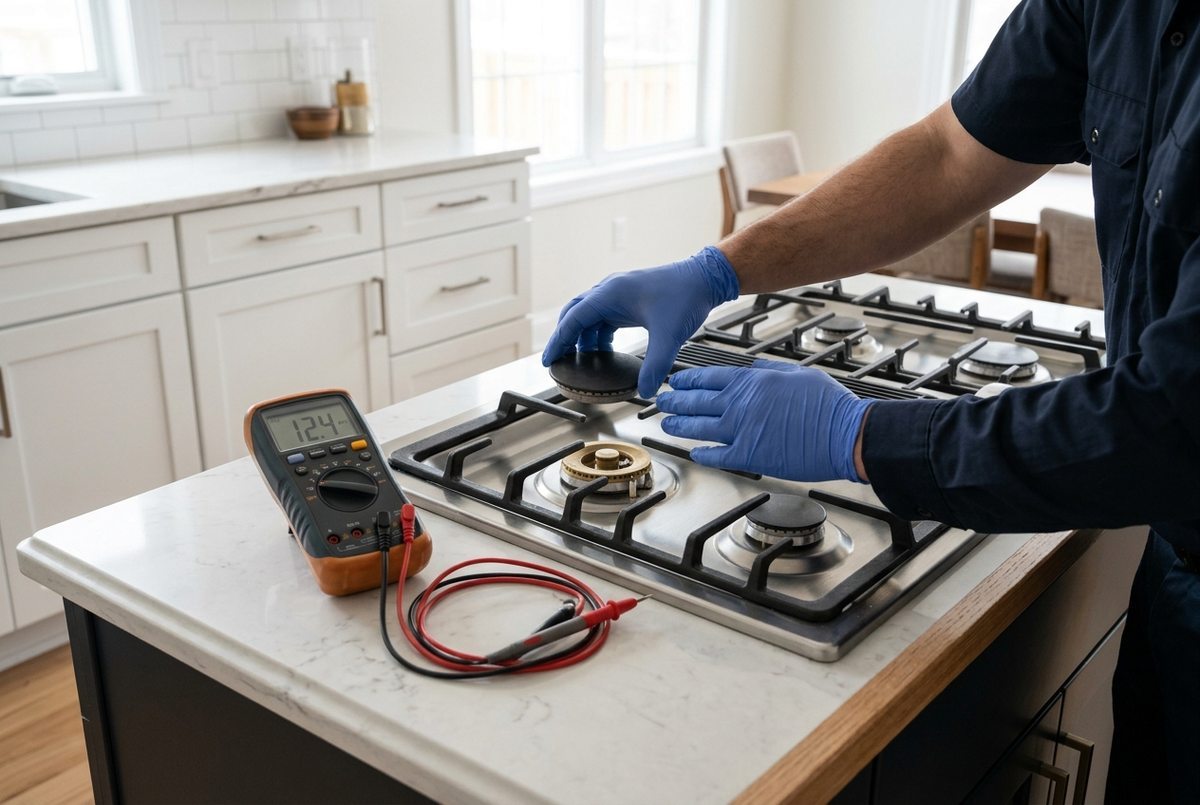
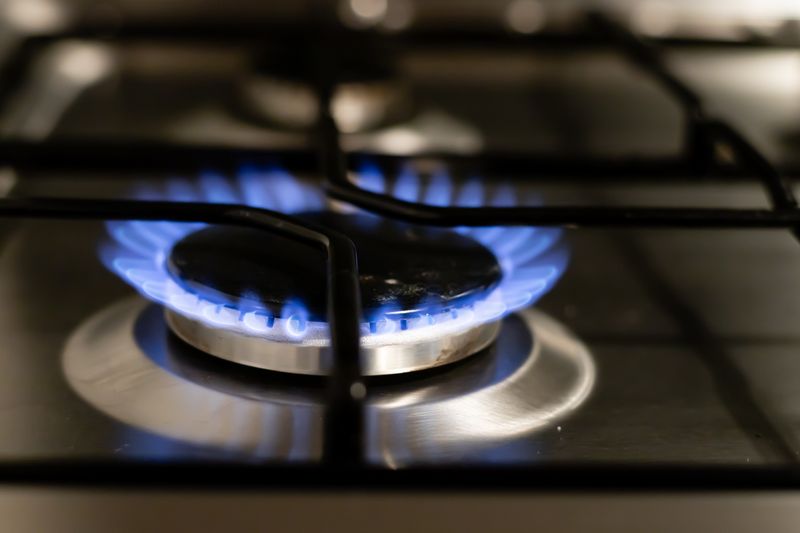
We repair gas and electric stoves in Montgomery, and a burner that clicks and clicks without lighting is telling you something specific. So is an electric coil that stays warm instead of hot, or a knob that only works on high. Gas cooktops fail at the igniter, the valve, or a clogged port. Electric ones fail at the element, the switch or the connection block. We identify which before we open anything. Yellow flames or a gas smell mean stop cooking and call us right away. Reach us, or use the quote form and list every burner acting up.
Call (800) 712-6387- Real people on the phone
- 7 days a week
- Quote in writing before any work
Taking calls until 5:00 PM CT
Common stove & range faults in Montgomery homes
- "The burner clicks and clicks but never lights" Spark module, cracked igniter ceramic, or a clogged burner port, and often it's moisture in the switch
- "My cookies burn on the bottom every time" Oven temperature calibration, a failing sensor, or a bake element heating unevenly
- "The oven says preheated but it's barely warm" Oven sensor drift, a weak igniter that never reaches gas-valve current, or an open bake element
- "One coil stays glowing red no matter the dial" Welded contacts inside the infinite switch, or a shorted element
- "Glass top burner heats, then quits, then heats" Cycling on thermal limit, usually a failing radiant element or a loose terminal connection
Montgomery coverage
From Montgomery we cover 36104, 36106, 36108, and 36110, plus nearby Millbrook, Prattville, and out toward Troy and Selma.
Other repairs we do in Montgomery
- Refrigerator Repair
- Washer Repair
- Dryer Repair
- Dryer Vent Cleaning & Repair
- Dishwasher Repair
- Oven Repair
Stove & Range Repair in cities near Montgomery
- Stove & Range Repair in Millbrook
- Stove & Range Repair in Prattville
- Stove & Range Repair in Pike Road
- Stove & Range Repair in Emerald Mountain
- Stove & Range Repair — Wetumpka, AL
Stove & Range Repair service hub → · All Montgomery services →
What homeowners in Montgomery get from an independent shop
| G Appliances MD | Big-box repair chains | Handyman listings | |
|---|---|---|---|
| Written quote before any work | ✓ | ✕ | ✕ |
| Live answer seven days a week | ✓ | ✕ | ✓ |
| Every major brand, gas or electric | ✓ | ✓ | ✕ |
| No manufacturer targets to hit | ✓ | ✕ | ✓ |
| Crews familiar with homes like yours | ✓ | ✕ | ✓ |
Homeowners on how the visit went
“Zero pressure at any point. The quote sat in my inbox for two days while I decided, no chasing calls.”
Rita M.Luverne, AL“He leveled the machine, replaced the pump, and ran a full cycle before leaving. Thorough.”
Dean S.Eutaw, AL“Wall oven is fifteen years old and they still sourced the part in three days.”
Vera K.Hartford, ALStove & Range Repair in Montgomery — quick answers
How do you tell a bad igniter from a bad gas valve?
We measure current draw while the igniter glows. A weak igniter glows but never pulls enough amps to open the valve, so no gas arrives. That one reading separates the two parts instead of guessing and replacing both.
My oven is off by 50 degrees. Is that repairable?
Usually, yes. Many ranges allow a calibration offset through the control panel. If the drift is bigger than that, or if it wanders, we test the oven sensor's resistance cold and hot, since a drifting sensor feeds bad numbers to the board.
Do you work on gas, electric, and induction ranges?
All three. Gas work involves igniters, valves, and burner assemblies. Electric means elements and infinite switches. Induction leans on coils, inverter boards, and cooling fans. We diagnose each one differently, because the failure families barely overlap.
Should I keep using a range with one dead burner?
Depends on the symptom. A dead electric coil is inconvenient, not dangerous. Clicking igniters, a gas smell, or a burner that lights late means unburned gas is collecting. Shut it off and call us instead of working around it.
How soon can you get to my house in Montgomery?
Tell us the symptom when you call us and we'll match you to the next open window, often same week. Morning and afternoon arrival windows are available on most weekdays. If your fridge is warming up or a leak is spreading, say so first — those move ahead of routine checks.
How it works
- Step 1
Describe the symptom
Tell us what you hear, smell, or see. Is it grinding, is there a puddle on the floor, is a code blinking at you? Small details narrow the list of likely causes before we ever pull the machine away from the wall.
- Step 2
We examine the machine
A technician works a checklist: power, controls, sensors, motors, seals, drainage. We test instead of guessing. Then we walk you through the actual fault and what your repair options are.
- Step 3
You choose the treatment
Some faults are worth fixing the same day. Others mean the appliance is near the end of its life. We tell you which one you're looking at, and we finish the repair once you say go.
- A real person answers
- Open 7 days
- Written quote before work starts
Why homeowners call us
- We think like diagnosticiansSwapping parts until something works costs you time. We trace the symptom back to its cause and confirm it with a test, then repair the thing that actually failed rather than the thing that merely looked suspicious.
- Second opinions are fine by usSomeone already told you the compressor is done, or that the control board is fried? Bring us in to check. We'll run our own examination and tell you honestly whether that diagnosis holds up.
- Brand-independent serviceWe're an independent repair company, and we work on refrigerators, washers, dryers, dishwashers, ovens, ranges, and freezers from all major brands. No brand steers our recommendation toward replacement over repair.
- Straight talk on repair or replaceNot every appliance deserves a rescue. If the numbers and the condition point toward a new unit, we say so. What you get is facts about your machine, not pressure to book work.
- All major brands, gas & electricEvery major appliance brand, gas and electric, handled by an independent shop.
- Straight answersWhen a repair doesn't make sense, we tell you, sometimes before we even roll a truck.
Stove & Range Repair in Montgomery
Each broken day has a price tag
Tell us the symptom, sign off on the written quote, get the machine back. Starting takes a minute.
- A real person answers
- Open 7 days
- Written quotes
- All major brands
- Gas & electric
Rather not call? Get a free quote →