Homeowners' pick for appliance repair across Alabama
Ice Maker Repair — Book a Visit Today
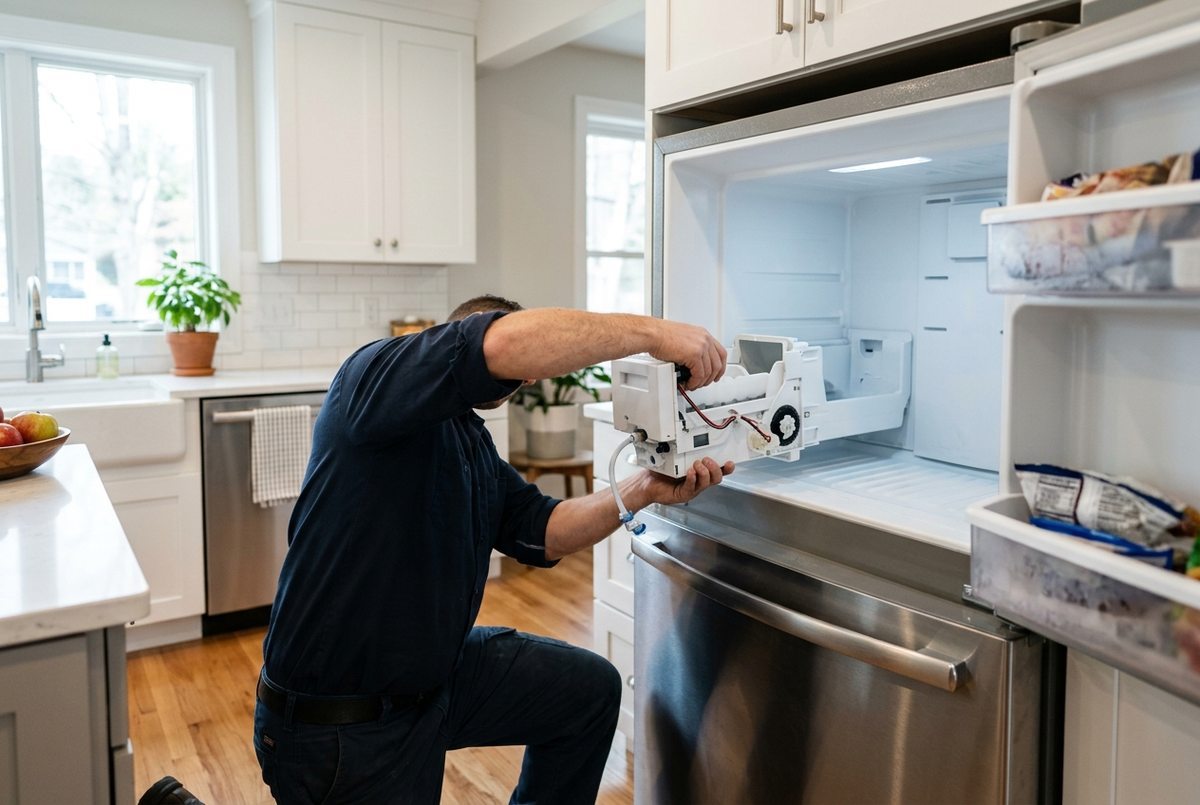
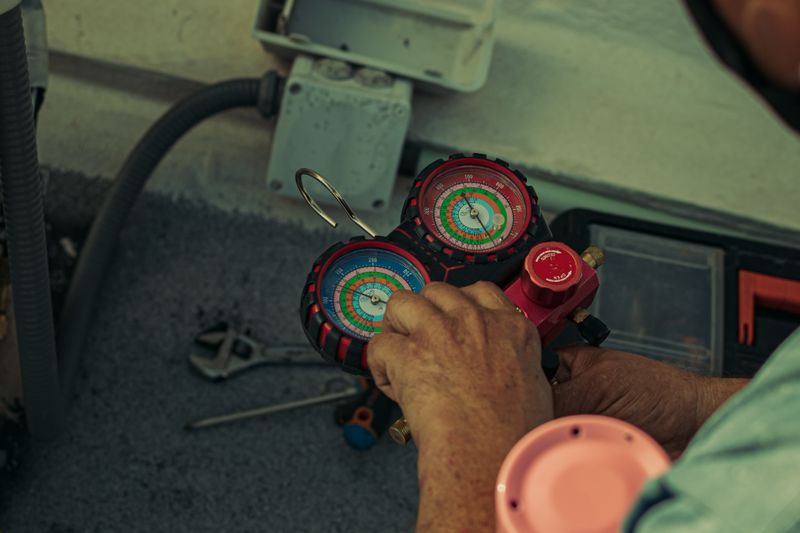
We repair refrigerator ice makers across Alabama, and the fastest way to start is to tell us what yours is doing. Ice makers fail in patterns. A frozen fill tube, a worn water inlet valve that dribbles or refuses to open, a jammed ejector arm, a burnt-out mold heater, a cracked water line, or a control board that stopped counting cycles. Sometimes the freezer itself is the problem. Too warm, and ice never releases. Too cold, and the fill line becomes a plug. Our visits start with questions, then measurements: water pressure at the valve, freezer temperature, harvest cycle timing. We show you what we found before we talk about parts, and then you decide. Describe the sounds, the clumps, the smell, and we will tell you what family of failure it points to. Call us.
Call (800) 712-6387- Real people on the phone
- 7 days a week
- Quote in writing before any work
Taking calls until 5:00 PM CT
The ice maker symptoms we hear most
- "No ice at all, and the bin is bone dry." Water supply side: shut-off valve, frozen fill tube, or a dead inlet valve solenoid.
- "It makes one giant clump instead of cubes." Slow harvest or overfill. Look at the mold heater, thermostat, or a leaking valve seat that keeps trickling.
- "Cubes are tiny, hollow, and cloudy." Low water volume: restricted line, clogged filter, or weak household pressure at the fridge.
- "Water pools under the freezer drawer." Cracked fill tube, split supply line, or a fill cup that has shifted out of alignment.
- "Grinding noise every couple of hours." Ejector or auger obstruction: a stuck arm, a broken gear in the module, or ice bridged against the mold.
Safe things to check first
Worth a look before you call — sometimes it saves you the visit.
- 1Confirm the saddle valve or shut-off behind the fridge is fully open and the line isn't kinked.
- 2Check that the freezer runs near zero degrees Fahrenheit. Warmer than that stalls the harvest cycle.
- 3Make sure the ice maker's own on/off switch or arm wasn't bumped off during a grocery load.
- 4Note how old the water filter is, since a long-overdue filter starves the fill cycle.
Guides & troubleshooting
What homeowners get from an independent shop
| G Appliances MD | Big-box repair chains | Handyman listings | |
|---|---|---|---|
| Written quote before any work | ✓ | ✕ | ✕ |
| Live answer seven days a week | ✓ | ✕ | ✓ |
| Every major brand, gas or electric | ✓ | ✓ | ✕ |
| No manufacturer targets to hit | ✓ | ✕ | ✓ |
| Crews familiar with homes like yours | ✓ | ✕ | ✓ |
Homeowners on how the visit went
“The quote explained what failed and why, in plain words. I actually understood my own dishwasher for once.”
Wade F.Luverne, AL“Freezer section thawed overnight. They triaged by phone, fit us in early, and saved most of the meat.”
Opal S.Eutaw, AL“Third generation machine in our family and they treated it with respect instead of pushing something new.”
Ben H.Hartford, ALIce Maker Repair — quick answers
How do you tell a water problem from a mechanical one?
We watch a fill cycle. If water arrives on schedule and in the right volume, the trouble sits in the mold, heater, or ejector. If it arrives late, thin, or never, we move upstream to the valve, line, and filter.
My ice tastes stale. Is that a repair issue?
Usually not a broken part. Old ice absorbs freezer odors, and a tired filter passes flavors through. Dump the bin, replace the filter, and give it two days of fresh production before deciding anything is wrong.
Is repairing an ice maker worth it, or should I replace the fridge?
Depends on what failed and the age of the unit. A valve or module swap on an otherwise healthy refrigerator makes sense. Widespread sealed-system trouble changes the math. We give you our read either way.
Why does the fill tube keep freezing shut?
Two common reasons. Water sits in the tube because the fill cup is misaligned, or the freezer runs colder than needed. Thawing it helps for a week. Correcting the cause is what stops the cycle.
Can you work on a standalone or under-counter ice machine?
Yes. Those use different harvest designs and often have condenser coils that clog with dust. We check airflow, water quality, and the drain path, since undercounter units fail from neglect more than from parts wearing out.
Do you handle every brand?
We service all major brands as an independent repair company. Refrigerator ice systems share the same building blocks (valve, mold, heater, ejector, control), so the diagnosis path holds regardless of the badge on the door.
How it works
- Step 1
Describe the symptom
Tell us what you hear, smell, or see. Is it grinding, is there a puddle on the floor, is a code blinking at you? Small details narrow the list of likely causes before we ever pull the machine away from the wall.
- Step 2
We examine the machine
A technician works a checklist: power, controls, sensors, motors, seals, drainage. We test instead of guessing. Then we walk you through the actual fault and what your repair options are.
- Step 3
You choose the treatment
Some faults are worth fixing the same day. Others mean the appliance is near the end of its life. We tell you which one you're looking at, and we finish the repair once you say go.
- A real person answers
- Open 7 days
- Written quote before work starts
Why homeowners call us
- We think like diagnosticiansSwapping parts until something works costs you time. We trace the symptom back to its cause and confirm it with a test, then repair the thing that actually failed rather than the thing that merely looked suspicious.
- Second opinions are fine by usSomeone already told you the compressor is done, or that the control board is fried? Bring us in to check. We'll run our own examination and tell you honestly whether that diagnosis holds up.
- Brand-independent serviceWe're an independent repair company, and we work on refrigerators, washers, dryers, dishwashers, ovens, ranges, and freezers from all major brands. No brand steers our recommendation toward replacement over repair.
- Straight talk on repair or replaceNot every appliance deserves a rescue. If the numbers and the condition point toward a new unit, we say so. What you get is facts about your machine, not pressure to book work.
- All major brands, gas & electricEvery major appliance brand, gas and electric, handled by an independent shop.
- Straight answersWhen a repair doesn't make sense, we tell you, sometimes before we even roll a truck.
Ice Maker Repair
Small faults become big ones on a schedule of their own
Describe the symptoms and we'll book the visit — takes about a minute.
- A real person answers
- Open 7 days
- Written quotes
- All major brands
- Gas & electric
Rather not call? Get a free quote →