Homeowners' pick for appliance repair across Alabama
Freezer Repair — Book a Visit Today
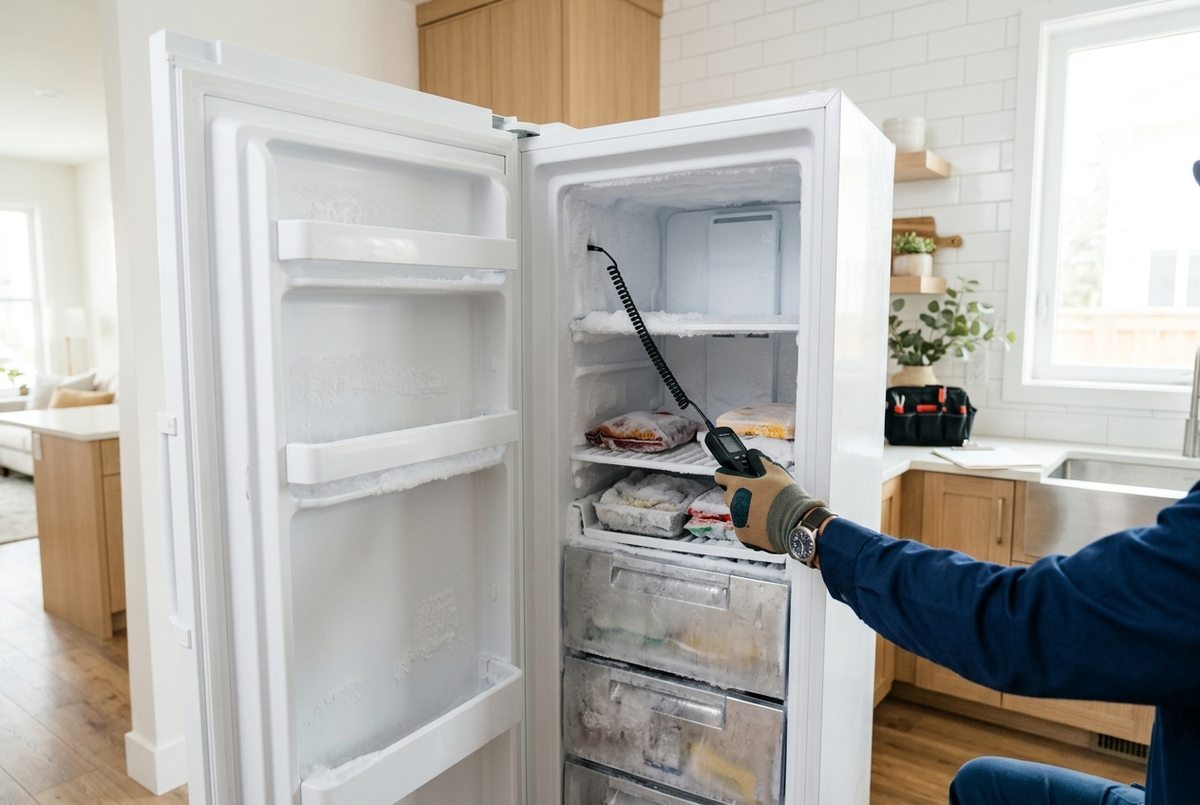
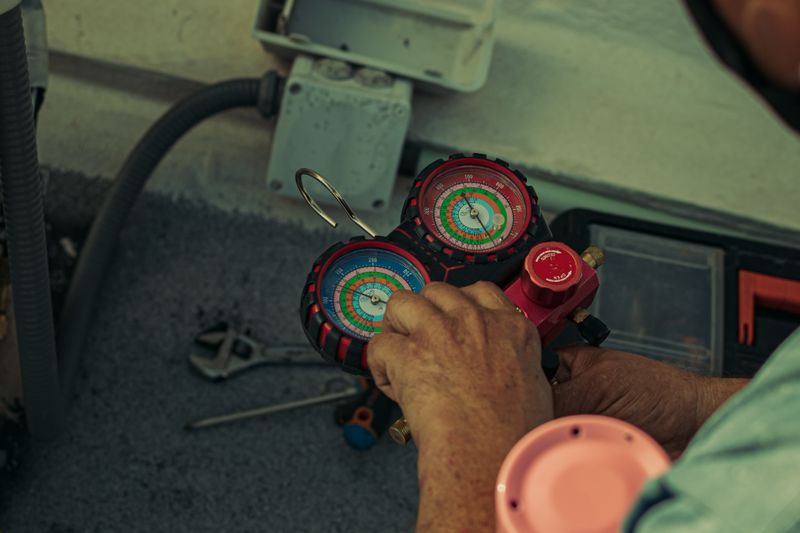
We repair home freezers across Alabama, and the fastest way to start is to call us and tell us what you're seeing. A freezer usually shows symptoms long before it quits: frost on the back wall, ice cream that scoops too easily, a motor that runs and never rests. Each of those points to a short list of parts, including the defrost heater, thermostat or sensor, evaporator fan, door gasket, sealed system, and control board. Our visit starts with questions, then a temperature reading, then a look at the coils and the airflow path. We test before we replace anything. If the diagnosis points somewhere expensive, we say so plainly and let you decide. Upright, chest, or the freezer half of a side-by-side, all get the same workup.
Call (800) 712-6387- Real people on the phone
- 7 days a week
- Quote in writing before any work
Taking calls until 5:00 PM CT
The freezer symptoms we hear most
- There's a wall of ice behind the baskets Defrost system failure: heater, bimetal thermostat, or a timer/control that isn't cycling
- Food is soft but the freezer feels cold Borderline temperature from weak airflow, a failing sensor, or a low refrigerant charge
- It runs constantly and never shuts off Bad thermostat, dirty condenser coils, or a door seal letting warm air in
- Water is pooling on the floor under it Blocked defrost drain, cracked drain pan, or ice melting from a stalled defrost cycle
- Loud buzzing or clicking every few minutes Struggling compressor, failing start relay, or an evaporator fan blade hitting ice
Safe things to check first
Worth a look before you call — sometimes it saves you the visit.
- 1Confirm the plug is fully seated, and test the outlet with a lamp or a phone charger to be sure it has power.
- 2Close the door on a dollar bill and tug. If it slides out easily, the gasket is leaking.
- 3Pull the unit out and look at the condenser coils underneath or behind for dust and pet hair.
- 4Check the temperature dial or digital setting in case it got bumped or reset after a power outage.
What homeowners get from an independent shop
| G Appliances MD | Big-box repair chains | Handyman listings | |
|---|---|---|---|
| Written quote before any work | ✓ | ✕ | ✕ |
| Live answer seven days a week | ✓ | ✕ | ✓ |
| Every major brand, gas or electric | ✓ | ✓ | ✕ |
| No manufacturer targets to hit | ✓ | ✕ | ✓ |
| Crews familiar with homes like yours | ✓ | ✕ | ✓ |
Homeowners on how the visit went
“They remembered the model from my last call and brought the matching part. That is a company paying attention.”
Walt G.Luverne, AL“Quote came by text within the hour, visit the next day, repair in forty minutes.”
Sonia H.Eutaw, AL“The kick panel came off, the coil got vacuumed, the fridge stopped roaring. Simple, honest work.”
Neil F.Hartford, ALFreezer Repair — quick answers
How cold should a home freezer actually be?
Zero degrees Fahrenheit is the standard target. A few degrees above that still feels cold to your hand, but it lets ice cream soften and frost build on packages. Put a thermometer between packages overnight and read it in the morning before you call.
My freezer works but the fridge side is warm. Is that one problem?
Usually yes. Most side-by-side and top-freezer models cool the freezer first, then push air over to the fridge. A blocked damper, a failed circulation fan, or heavy frost on the evaporator can starve the fresh food side while the freezer stays cold.
Should I defrost it manually before you come out?
Please don't, if you can help it. Melting the ice erases the evidence we use to diagnose the defrost circuit. If food safety is at risk, move everything to coolers and tell us what the ice looked like before you cleared it.
Is a chest freezer worth repairing?
Often it is. A chest freezer is a simple machine: thermostat, relay, compressor, gasket. Many failures come down to a single inexpensive part. We tell you what we found and what it takes to fix, then you decide whether repair or replacement makes more sense.
Do you work on garage and basement freezers?
Yes. Those units face swings in room temperature that indoor models never see. A cold garage can confuse a thermostat and keep the compressor from cycling the way it should. We check whether the unit is rated for the space it's sitting in.
How long can food stay frozen during a repair?
A full freezer holds safe temperatures roughly a day if the door stays shut. A half-empty one, considerably less. Keep it closed. If the repair is going to stretch longer, coolers with ice or a neighbor's spare freezer will buy you time.
How it works
- Step 1
Describe the symptom
Tell us what you hear, smell, or see. Is it grinding, is there a puddle on the floor, is a code blinking at you? Small details narrow the list of likely causes before we ever pull the machine away from the wall.
- Step 2
We examine the machine
A technician works a checklist: power, controls, sensors, motors, seals, drainage. We test instead of guessing. Then we walk you through the actual fault and what your repair options are.
- Step 3
You choose the treatment
Some faults are worth fixing the same day. Others mean the appliance is near the end of its life. We tell you which one you're looking at, and we finish the repair once you say go.
- A real person answers
- Open 7 days
- Written quote before work starts
Why homeowners call us
- We think like diagnosticiansSwapping parts until something works costs you time. We trace the symptom back to its cause and confirm it with a test, then repair the thing that actually failed rather than the thing that merely looked suspicious.
- Second opinions are fine by usSomeone already told you the compressor is done, or that the control board is fried? Bring us in to check. We'll run our own examination and tell you honestly whether that diagnosis holds up.
- Brand-independent serviceWe're an independent repair company, and we work on refrigerators, washers, dryers, dishwashers, ovens, ranges, and freezers from all major brands. No brand steers our recommendation toward replacement over repair.
- Straight talk on repair or replaceNot every appliance deserves a rescue. If the numbers and the condition point toward a new unit, we say so. What you get is facts about your machine, not pressure to book work.
- All major brands, gas & electricEvery major appliance brand, gas and electric, handled by an independent shop.
- Straight answersWhen a repair doesn't make sense, we tell you, sometimes before we even roll a truck.
Freezer Repair
Small faults become big ones on a schedule of their own
Describe the symptoms and we'll book the visit — takes about a minute.
- A real person answers
- Open 7 days
- Written quotes
- All major brands
- Gas & electric
Rather not call? Get a free quote →